
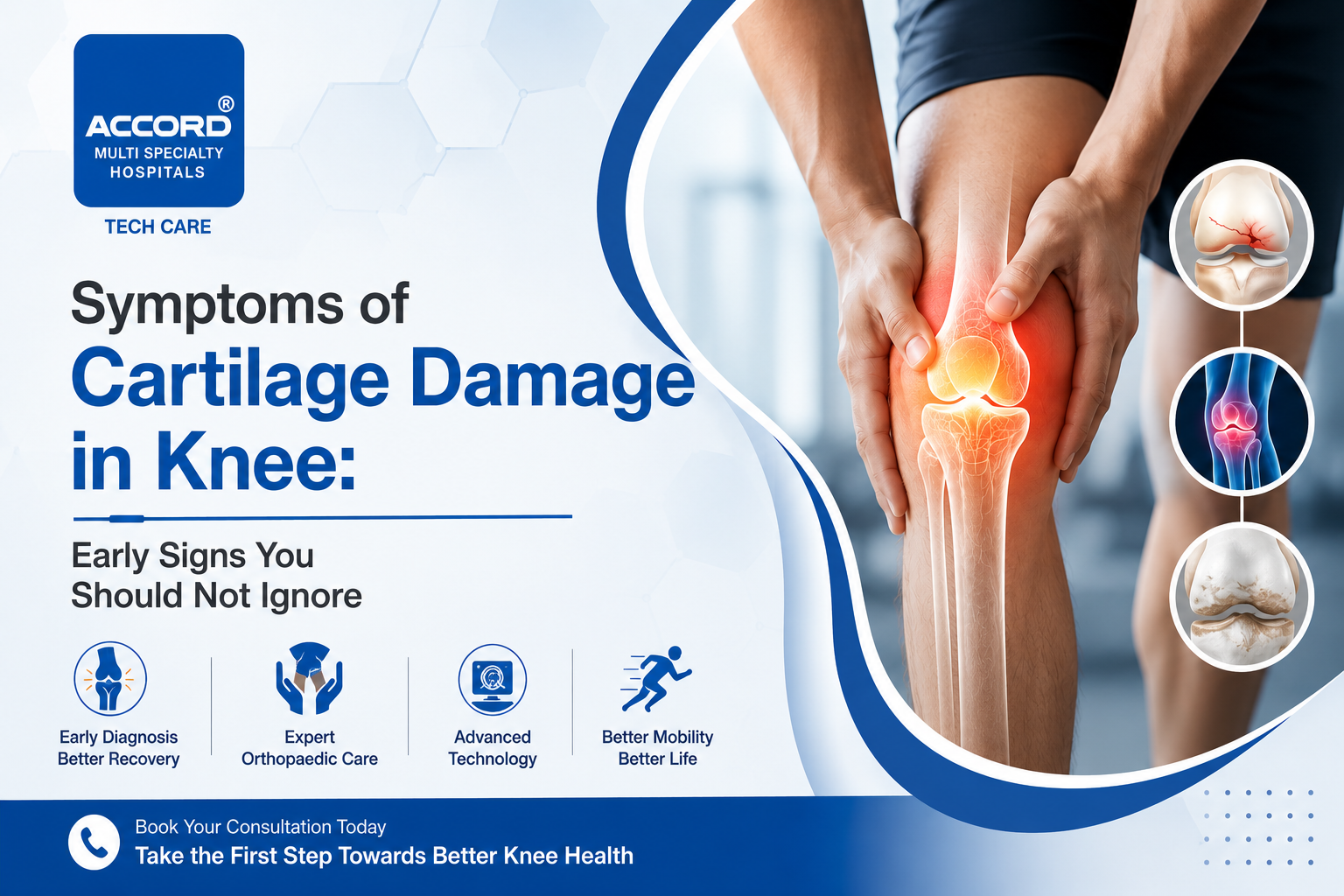
Knee pain is one of the most common orthopaedic concerns affecting people across different age groups. Whether caused by ageing, sports injuries, obesity, or repetitive strain, damage to the knee cartilage can significantly impact mobility and quality of life. Unfortunately, many individuals ignore the early symptoms, assuming the discomfort is temporary.
Recognising the symptoms of cartilage damage in knee early can help prevent worsening joint problems and support timely treatment. Since cartilage plays a vital role in smooth joint movement, any damage to it can gradually affect daily activities such as walking, climbing stairs, or even standing for long periods.
What Is Knee Cartilage and Why Is It Important
Cartilage is a smooth, flexible tissue that cushions the bones within the knee joint. It reduces friction and absorbs shock during movement.
Healthy cartilage allows the knee to move smoothly and comfortably. However, when cartilage becomes damaged due to injury, wear and tear, or medical conditions, the joint may become painful and stiff.
Common causes of cartilage damage include:
- Sports injuries
- Age related degeneration
- Excess body weight
- Sudden twisting movements
- Repetitive stress on the knee joint
If left untreated, cartilage damage may eventually lead to osteoarthritis and long term mobility issues.
Common Symptoms of Cartilage Damage in Knee
The severity of symptoms depends on the extent of damage. Some individuals experience mild discomfort initially, while others may develop persistent pain and instability.
1. Persistent Knee Pain
Pain is one of the earliest and most common cartilage damage symptoms. It may worsen during physical activity or after prolonged movement.
The pain may:
- Feel dull or sharp
- Increase while climbing stairs
- Become worse after exercise
2. Swelling Around the Knee
Inflammation caused by cartilage damage can lead to noticeable swelling around the joint.
This swelling may:
- Develop after activity
- Cause tightness in the knee
- Limit movement temporarily
Recurring swelling should not be ignored, especially if it becomes frequent.
3. Stiffness and Reduced Flexibility
Individuals with cartilage damage often notice difficulty bending or straightening the knee fully.
Morning stiffness or stiffness after sitting for long periods is common and may gradually worsen over time.
4. Grinding or Clicking Sensation
A grinding, cracking, or clicking sound while moving the knee may indicate damaged cartilage surfaces rubbing against each other.
This symptom is medically known as crepitus and is often associated with joint degeneration.
5. Knee Locking or Catching
In some cases, damaged cartilage fragments may interfere with smooth joint movement.
This can cause:
- Sudden locking of the knee
- Difficulty moving the joint
- Sensation of the knee “catching” during movement
6. Knee Instability
Cartilage damage may affect joint stability, making the knee feel weak or unstable.
Some individuals may feel:
- The knee giving way suddenly
- Lack of confidence while walking
- Difficulty balancing on stairs
When Should You See a Doctor
Many people delay treatment until pain becomes severe. However, early diagnosis can help preserve joint function and prevent long term complications.
You should consult an orthopaedic specialist if you experience:
- Persistent knee pain lasting several weeks
- Swelling that keeps returning
- Difficulty walking or climbing stairs
- Reduced knee mobility
- Grinding or locking sensations
How Cartilage Damage Is Diagnosed
Doctors use a combination of physical examination and imaging tests to assess knee cartilage health.
Common diagnostic methods include:
- Physical examination of joint movement
- X rays to assess joint space
- MRI scans for detailed cartilage imaging
- Arthroscopy in selected cases
Treatment Options for Cartilage Damage
Treatment depends on the severity of damage, age, activity level, and overall joint condition.
Non Surgical Treatments
Mild to moderate cases may improve with conservative treatment such as:
- Physiotherapy
- Anti inflammatory medications
- Weight management
- Activity modification
- Knee support braces
Strengthening surrounding muscles can also reduce stress on the joint.
Advanced Treatments
In more severe cases, additional procedures may be recommended:
- Cartilage repair procedures
- Arthroscopic surgery
- Joint preservation techniques
- Knee replacement surgery in advanced degeneration
Treatment aims to reduce pain, improve mobility, and prevent further joint damage.
Can Cartilage Damage Be Prevented
While not all cases are preventable, certain lifestyle habits can reduce the risk of knee cartilage problems.
Maintain a Healthy Weight
Excess body weight increases pressure on knee joints.
Stay Physically Active
Regular low impact exercise helps strengthen muscles and improve joint stability.
Avoid Sudden Knee Strain
Warm up before exercise and avoid excessive twisting movements.
Address Knee Injuries Early
Prompt treatment of sports or ligament injuries may reduce future cartilage damage risk.
Why Early Treatment Matters
Ignoring early cartilage damage symptoms may allow the condition to worsen over time. Delayed treatment can increase the risk of:
- Chronic knee pain
- Reduced mobility
- Osteoarthritis
- Need for major surgery later
Do Not Ignore Persistent Knee Discomfort
Knee pain that keeps returning or worsens with movement should never be ignored. Recognising the early symptoms of cartilage damage in knee can help prevent long term complications and support faster recovery.
At Accord Hospitals, our orthopaedic specialists focus on accurate diagnosis and personalised treatment for knee and joint conditions. From conservative care to advanced surgical solutions, we help patients regain mobility and return to daily activities with confidence.
Book your consultation today and take the first step towards better knee health and long term joint care.
FAQs
1. What are the early symptoms of cartilage damage in knee?
Persistent pain, swelling, stiffness, and clicking sounds are common early symptoms.
2. Can cartilage damage heal naturally?
Minor damage may improve with rest and therapy, but severe cartilage damage often requires medical treatment.
3. Is knee cartilage damage permanent?
Cartilage has limited healing ability, but proper treatment can help manage symptoms and improve function.
4. Can exercise worsen cartilage damage?
High impact activities may worsen symptoms, but guided physiotherapy and low impact exercises are beneficial.
5. When is surgery needed for cartilage damage?
Surgery may be recommended if conservative treatments fail or if damage is severe.