
Overview
A mammogram is an x-ray picture of the breast. You will get both breasts x-rayed from the front and from the side. Afterwards, a radiologist (a doctor with special training) will read the mammogram. The doctor reading your mammogram will be looking for different types of breast changes, such as small white spots called calcifications, abnormal areas called masses, and other suspicious findings that could be signs of cancer. A mammogram reduces the risk of death due to breast cancer. It is useful for detecting all types of breast cancer, including invasive ductal and invasive lobular cancer. It improves a physician’s ability to detect small tumors. The use of mammography also increases the detection of non-cancer-related ailments.
What is it used for?
It is highly recommended that women over the age of 40 get annual mammograms to detect early signs of breast cancer and maintain breast health. It is also highly advisable that women with a family history of breast cancer begin getting mammograms at age 30. Prevention is better than cure, and early detection can be a boon to your wellbeing. At ACCORD Hospitals, we have highly skilled technicians and renowned consultants who will help perform your test seamlessly and evaluate your results.
- Detection of breast cancer
- Detection of small abnormal tissue growths confined to the milk ducts in the breast, called ductal carcinoma in situ (DCIS)
- Non-cancerous calcifications (calcium deposits) that are common in women over the age of 50 and may be due to breast injuries, aging, or inflammation
- Masses such as cysts, fibroadenomas, or cancerous tumors
How to Prepare for a Mammogram
Proper preparation can help ensure a clear image and make the experience more comfortable.
- Schedule at the Right Time: If you are pre-menopausal, try to schedule your mammogram for the week after your menstrual period. Your breasts are typically less tender and swollen at this time, which can reduce discomfort.
- Avoid Certain Products: On the day of your mammogram, avoid using deodorants, antiperspirants, powders, lotions, creams, or perfumes on your chest and underarm areas. These products can show up as white spots on the mammogram and interfere with the interpretation of the images.
- Wear a Two-Piece Outfit: Since you will need to undress from the waist up, wearing a shirt or top with a skirt or pants can make it easier to get ready for the exam.
- Bring Previous Records: If you’ve had mammograms at a different facility, it’s helpful to bring the images or a list of where they were done. The radiologist can use your previous mammograms for comparison to look for any changes in your breast tissue over time.
- Inform the Technologist: Be sure to tell the technologist if you have breast implants, if you are pregnant or breastfeeding, or if you have any breast changes or symptoms (like a lump or nipple discharge).
How it’s Done
A mammogram is performed by a radiologic technologist, usually a woman. The process is quick, taking only about 15-20 minutes for both breasts.
 1
1
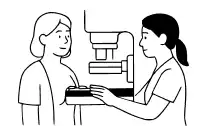
Preparation & Positioning:
You’ll be asked to undress from the waist up and stand in front of the mammography machine.
 2
2
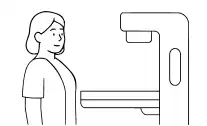
Compression:
A clear paddle compresses the breast to spread tissue evenly, reduce radiation, and prevent blurring.
 3
3
Taking Images:
X-ray images are taken from at least two angles for each breast, with compression lasting only a few seconds.
 4
4
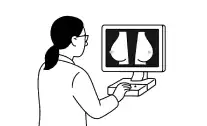
Checking Images:
The technologist reviews the images for clarity, then repeats the process for the other breast.
How it will Feel
An ultrasound is generally painless.
- Sensation – You will feel the pressure of the transducer on your skin as the sonographer moves it around. You might also feel a slight cold sensation from the gel.
- Discomfort – If you have to keep a full bladder, you may feel some discomfort or pressure. In some cases, if the area being scanned is already sensitive or painful, the pressure from the transducer might cause some temporary discomfort.
- Internal Scans – Internal ultrasounds may feel a little uncomfortable, but they should not be painful. The transducer is lubricated and carefully inserted. You can always communicate with the sonographer if you are feeling too much discomfort.