
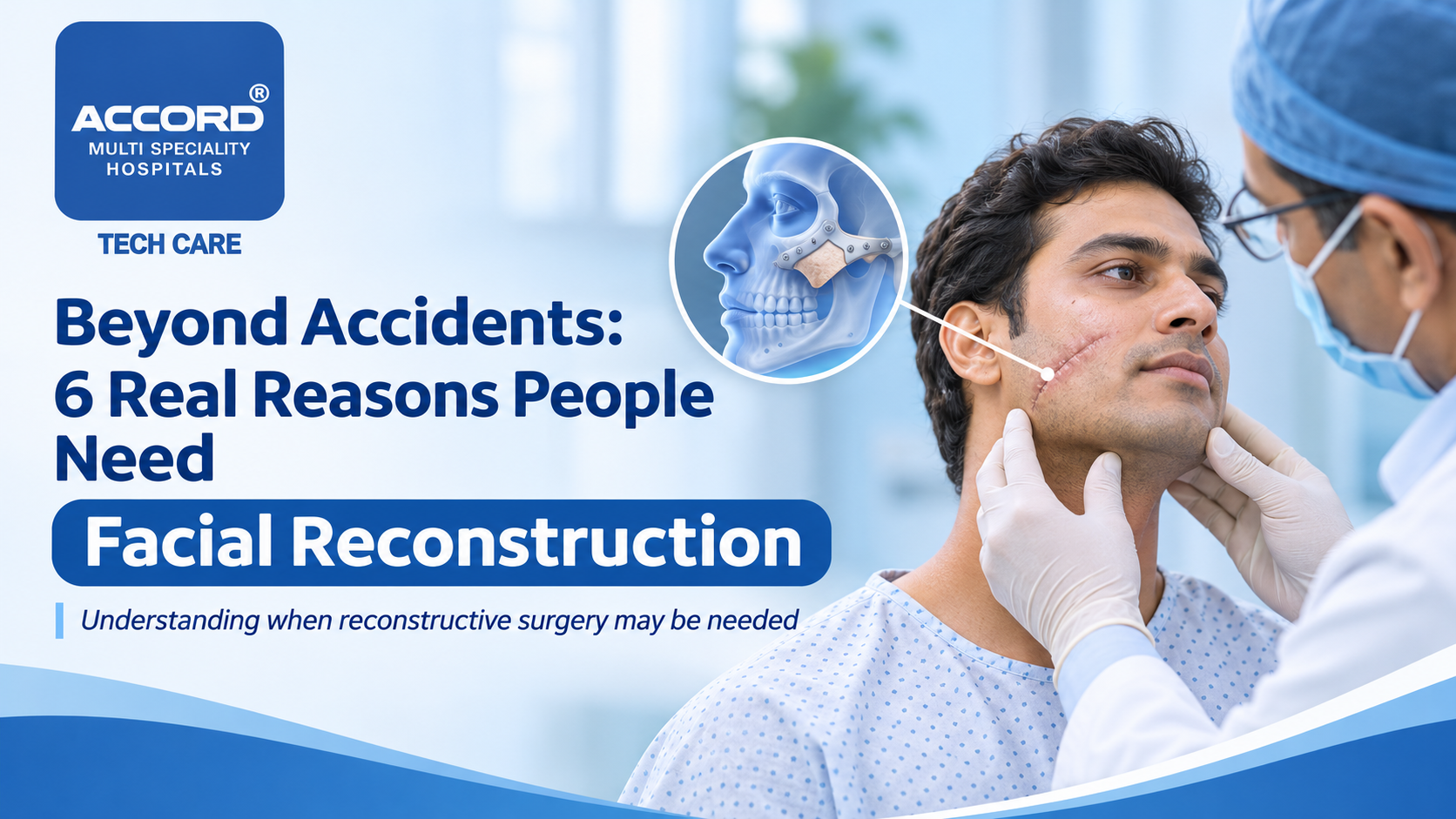
When people hear the words facial reconstruction, they often picture someone recovering from a serious road accident. Severe facial trauma is indeed a common reason, and what facial reconstruction surgery involves after an injury is well worth understanding. But many people who need facial reconstruction surgery have never been in an accident at all.
Conditions present from birth, illnesses, cancer treatment and nerve problems can all change how the face looks and works. Understanding these less obvious reasons can help families recognise when specialist assessment may be helpful, and reassure them that options exist.
What Facial Reconstruction Aims to Achieve
Facial reconstruction surgery restores the structure, function and appearance of the face. Depending on the problem, it may involve the skin, muscles, nerves, cartilage or bones.
The goal is rarely cosmetic alone. It often aims to help someone eat, speak, breathe, close their eyes or smile more comfortably, while also restoring a natural appearance. Treatment frequently involves a team that may include plastic and reconstructive surgeons, oral and maxillofacial surgeons and other specialists.
1. Reconstruction After Head and Neck Cancer Surgery
Cancers of the mouth, jaw, tongue, sinuses or facial skin often need surgery that removes healthy tissue around the tumour to lower the risk of it returning. This can leave gaps in the jaw, cheek, lips or palate.
Reconstruction is often planned alongside cancer treatment and may use tissue or bone moved from elsewhere in the body, such as the leg or forearm, to rebuild the face and help restore eating and speech.
2. Burns and Scarring
Burns from fire, hot liquids, chemicals or electricity can damage the skin and deeper tissues of the face. As burns heal, scar tissue may tighten, pulling on the eyelids, lips or neck and limiting movement.
Reconstruction may involve releasing tight scars, skin grafts, tissue expansion or flaps of nearby skin. Treatment is often carried out in stages over months or years, as scars mature and the face continues to change.
3. Conditions Present From Birth
Some children are born with differences in how the face has formed. The most common is cleft lip and palate, where parts of the lip or roof of the mouth do not fully join before birth. Others include rarer craniofacial conditions affecting the skull and facial bones.
These conditions can affect feeding, speech, hearing and dental development. Surgery is usually planned in stages from infancy to the teenage years, alongside speech therapy, dental care and support from ENT specialists where hearing or breathing is affected.
4. Facial Nerve Paralysis
The facial nerve controls the muscles that let us smile, blink and close the eyes. It can be damaged by conditions such as Bell’s palsy, stroke, tumours, infections, ear surgery or injury.
Many people with Bell’s palsy recover well with medical care, often managed with input from neurology specialists. When weakness persists, it can leave the face drooping on one side, make eating and speaking harder, and stop the eye from closing properly. Reconstructive options may include nerve repair, muscle transfer, eyelid procedures or static supports to improve symmetry and eye protection.
5. Jaw Growth Problems and Deformities
Sometimes the upper and lower jaws grow at different rates or out of line, leading to a severe overbite, underbite, open bite or facial asymmetry. These differences can affect chewing, speech, breathing during sleep and jaw comfort.
Facial bone reconstruction to reposition the jaws, called orthognathic surgery, is often combined with braces before and after the operation. It is usually considered once facial growth has finished, typically in the late teens or early adulthood.
6. Infections and Bone Loss
Serious infections can damage facial tissues and bones. Examples include deep infections of the jawbone, called osteomyelitis, and aggressive fungal infections such as mucormycosis. Treatment may require removing infected tissue, which can leave significant gaps in the palate, cheek or eye socket.
Once the infection has been controlled, reconstruction may restore structure and function using bone grafts, tissue flaps, dental prostheses or custom implants.
What to Expect When Considering Reconstruction
Every case is different, so assessment usually involves detailed examination, scans such as CT, and discussion of goals and priorities. Reconstruction may happen in one operation or in stages, and recovery depends on the procedure. Emotional support is an important part of care, as changes to the face can affect confidence and wellbeing.
Understanding Your Options for Facial Reconstruction
Facial reconstruction is needed for many reasons beyond accidents, including cancer surgery, burns, conditions present from birth, facial nerve paralysis, jaw deformities and serious infections. Each affects both appearance and everyday functions such as eating, speaking and breathing.
Treatment is often staged and involves several specialists working together, with careful planning around the individual’s needs. Early assessment, even years after the original problem, can help clarify what is realistically possible and which approach may suit each person best. The plastic and reconstructive surgery department at Accord Hospitals provides assessment and reconstructive procedures for facial conditions, working alongside related specialities where needed.
Frequently Asked Questions
Is facial reconstruction only cosmetic?
No. It often restores essential functions such as eating, speaking, breathing and eye protection, while also improving appearance.
Can facial reconstruction be done years after the original problem?
Yes. Many people have reconstruction long after an injury, illness or cancer treatment, once they are medically stable.
Will there be visible scars?
Surgeons usually try to place incisions in natural creases or hidden areas, although some scarring is likely.